Table of contents
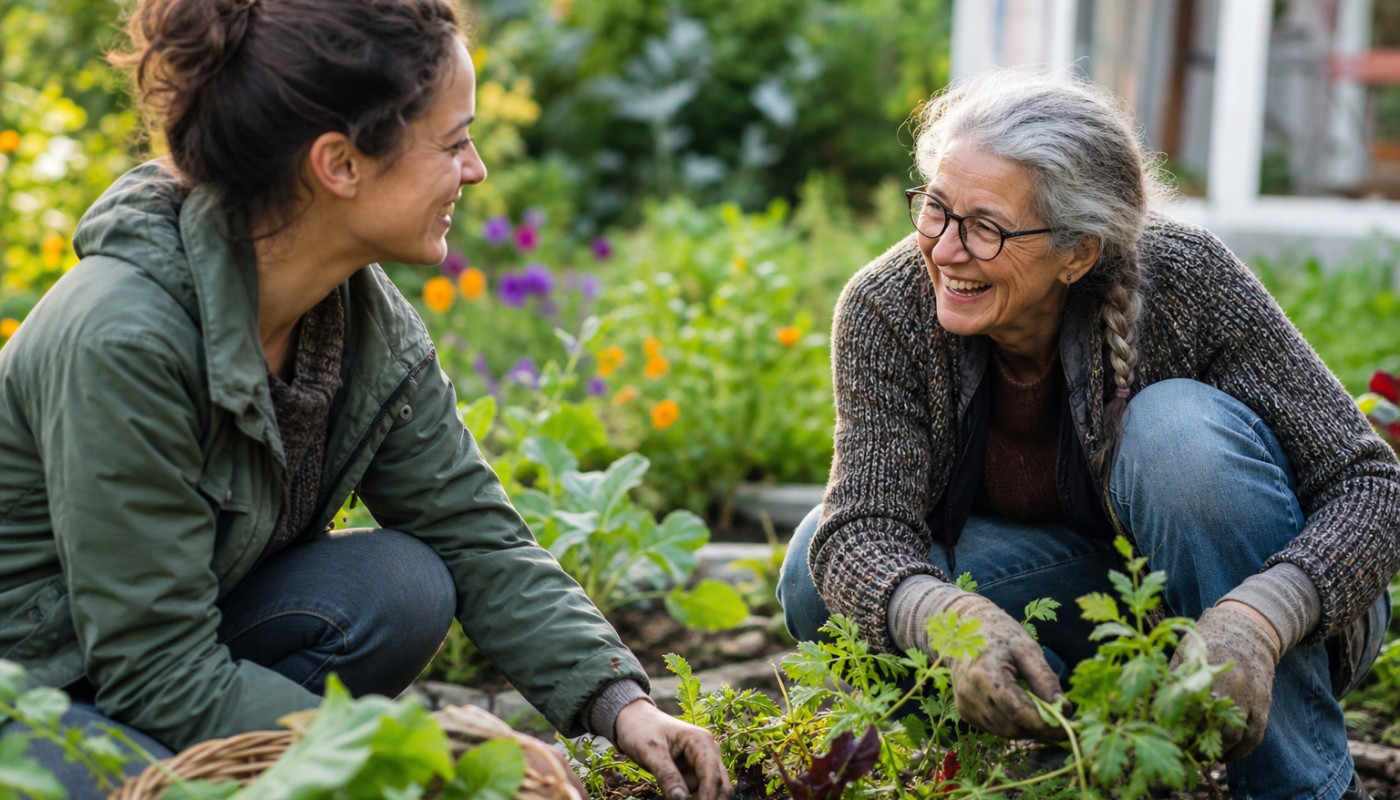
In cities where loneliness is now measured as a public health risk, community gardens are quietly becoming places where people do more than grow food, they grow one another’s resilience. Research across Europe and North America increasingly links social connection to lower stress, better self-rated health, and even longer lives, yet the role of everyday conversation is often overlooked. In a shared plot, small talk turns into mutual support, and that shift can translate into measurable health gains.
Small talk, big impact on stress
It starts with a question that barely sounds medical: how are your tomatoes doing? Yet the physiological stakes are real, because social interaction is one of the strongest buffers against stress, and chronic stress is a known driver of cardiovascular disease, sleep disruption, and depression. A 2015 meta-analysis in Perspectives on Psychological Science that pooled data from more than 300,000 participants found that stronger social relationships were associated with a 50% increased likelihood of survival, an effect size comparable to well-known risk factors such as smoking and obesity, and while gardens are not hospitals, they are reliable engines of repeated, low-pressure contact.
Collaborative gardening conversations also tend to be “micro-restorative”, short exchanges that interrupt rumination, add perspective, and normalize everyday setbacks. Studies on social support consistently show that the perception of being supported matters almost as much as support itself, and community gardens create that perception through routine presence. Public health research has repeatedly connected loneliness to elevated cortisol and inflammatory markers, and although cortisol is not measured at the garden gate, reduced perceived stress is reported frequently in studies of nature-based interventions. The mechanism is straightforward: conversation in a calm environment lowers threat perception, reduces vigilance, and can nudge the body toward parasympathetic recovery, the part of the nervous system that slows heart rate and supports digestion.
There is also a subtle but important difference between scheduled socializing and garden talk. The latter is task-based, meaning you can speak while your hands are busy, which lowers the pressure to “perform” socially, and for people who struggle with anxiety or grief, that can be the difference between staying home and showing up. Over weeks, casual exchanges layer into trust, and trust is a powerful stress moderator, because it changes how people interpret problems, whether they feel alone, and whether they believe help is available. If stress is a long game, gardens create small, repeatable moves that tilt the odds.
Why gardeners listen differently
People open up faster than they expect. Part of it is the setting, because green space and outdoor activity are consistently associated with better mood and lower tension, and part of it is the social script, since advice in a garden is offered as a practical tool rather than a judgment. “Try more compost” can lead, surprisingly quickly, to “I haven’t slept well in weeks”, and that transition matters, because health risks often escalate in silence. In the UK, for example, the NHS has increasingly supported “social prescribing”, a pathway where clinicians refer patients to community activities, and community gardening is among the commonly cited options precisely because it blends movement, purpose, and human contact.
Listening is not a soft skill here, it is built into the work. When you garden together, you watch for small changes, yellowing leaves, dry soil, pests, and that attentiveness often carries over into how people notice one another, whether someone looks exhausted, whether they missed two weeks, whether their usual humor has gone. That gentle monitoring can push someone to seek help earlier, and early help is one of the strongest predictors of better outcomes in both mental health and chronic disease management. It is not that gardeners diagnose each other, they don’t, but they do something public health systems struggle to do at scale: they notice.
The conversations also tend to be cross-generational and cross-cultural, a rarity in many neighborhoods, and diversity of ties has its own benefits. Sociologists distinguish between “bonding” ties, close relationships within a group, and “bridging” ties, looser connections across groups, and both are linked to wellbeing, employment, and community safety. A garden committee meeting may be mundane, but it trains cooperation, conflict resolution, and shared norms, skills that reduce social friction and strengthen a sense of control. Control, in health psychology, is not a buzzword, it is associated with lower stress reactivity and better coping, and gardeners practice it every time they negotiate watering schedules or decide how to share a harvest.
Conversation as a health “nudge”
Health advice lands differently when it comes sideways. Public campaigns often struggle because they feel abstract, whereas a tip from a fellow gardener arrives embedded in a relationship and anchored to a concrete task, and that makes it stick. Someone mentions stretching before digging, someone else talks about switching to lighter tools after a shoulder injury, and suddenly the group is exchanging informal prevention strategies. This kind of peer-to-peer learning is well documented in public health, and it works partly because it reduces the gap between knowledge and action, turning information into habit through repetition and social reinforcement.
Diet is another area where conversation quietly shifts behavior. Gardening increases access to fresh produce, but the bigger change is often culinary confidence, people swap recipes, talk about seasonal eating, and share what they do with surplus greens. Evidence links higher fruit and vegetable intake to lower risk of cardiovascular disease and certain cancers, and while gardens do not guarantee perfect diets, they make healthy choices more visible and more normal. The social element matters because eating patterns are contagious; people mirror what peers value, and when a neighbor celebrates a new crop of beans, it subtly redefines what feels rewarding.
There is a practical side as well: conversations create pathways to resources. Someone knows where to find affordable tools, another knows about a municipal compost program, a third mentions a local charity that delivers soil to community sites, and those small informational exchanges reduce barriers. In many cities, financial stress and lack of access are major obstacles to healthier living, and gardens operate like informal “resource hubs” without the stigma that can follow formal aid. For groups that are often underserved, migrants, older adults living alone, or low-income families, the ability to ask a quick question and get a useful answer can be a meaningful health support in itself.
Technology is also entering these spaces, not to replace conversation but to extend it. Many garden groups now coordinate by messaging apps, keep digital planting calendars, or use simple trackers to manage watering rotations, and some are experimenting with tools that help volunteers answer questions consistently, whether about plant care or accessibility needs. For gardeners curious about digital support systems that can organize knowledge and lighten coordination work, it can be useful to go to these guys, especially as community projects increasingly balance in-person time with online planning.
The hidden workout in shared plots
Gardening looks gentle, until you do it for an hour. It combines light to moderate physical activity, lifting, squatting, walking, and grip work, and physical activity is one of the most established protective factors for health, lowering risk of heart disease, type 2 diabetes, and some cancers. The World Health Organization recommends adults aim for 150 to 300 minutes of moderate-intensity activity per week, and for many people who dislike gyms, gardening is one of the few activities they will do consistently. Consistency is the point, because health benefits accumulate through routine rather than bursts of effort.
Collaborative gardens add an extra layer: accountability. When people know others expect them on watering day, they show up, and showing up is half the battle in behavior change. The movement is also functional, meaning it supports daily living, which is particularly important for older adults at risk of falls and loss of mobility. Community gardening programs have been studied in relation to wellbeing and physical function, and while results vary by population and design, the direction is frequently positive, improved mood, more activity, and a stronger sense of purpose.
Purpose deserves its own line in the health ledger. Large studies on psychological wellbeing have associated a sense of meaning with lower mortality risk and better health behaviors, and gardens generate meaning in an unusually tangible way: you can see the result of your effort, you can share it, and you can feel needed. That matters for people navigating retirement, unemployment, or bereavement, times when routines fray and social roles shrink. In a garden, roles multiply, the seed starter, the compost organizer, the person who knows how to repair a hose, and each role creates opportunities for conversation that is neither forced nor therapeutic in name, but often therapeutic in effect.
How to join without feeling awkward
Walking into an established garden can feel like entering a small village. The easiest path is practical: start with a workday or open session, bring gloves if you have them, and ask a simple question about what needs doing, because task-based entry lowers social pressure and signals respect for the group’s rhythm. Most community gardens have a coordinator, a local association, or a municipal contact, and many cities list available plots and waiting lists on their websites, especially in spring when demand spikes.
Budget is usually manageable, but it varies. Annual fees can range from free to modest sums that cover water access, insurance, or shared tools, and some gardens offer reduced rates for students, low-income households, or seniors. If cost is a concern, ask directly about solidarity plots, tool libraries, or seed swaps, because these informal systems are common, and they are designed to widen access. Local councils and public health departments sometimes provide grants for communal beds, accessibility improvements, or educational workshops, and garden coordinators often know where to apply and how to document eligibility.
To keep it sustainable, choose a commitment level you can maintain, and be honest about it. A small bed well tended beats an ambitious plot that becomes a source of stress, and the point, after all, is health. If you are joining for wellbeing, consider pairing a regular slot, say one evening a week, with a social moment, a tea break, a seed exchange, a harvest day, because conversation is not a side effect here, it is part of the medicine.
Making the first visit count
Pick a low-stakes time, ask what the group needs, and leave with one concrete next step, a watering shift, a shared task, or a contact for the next meetup. Plan a modest budget for basics, look for reduced fees or municipal support if available, and treat the garden as a long-term routine rather than a one-off hobby.
On the same subject

Exploring The Impact Of Digital Detox On Modern Productivity

Cognitive Benefits of Playing Online Money Games
